
 lowereas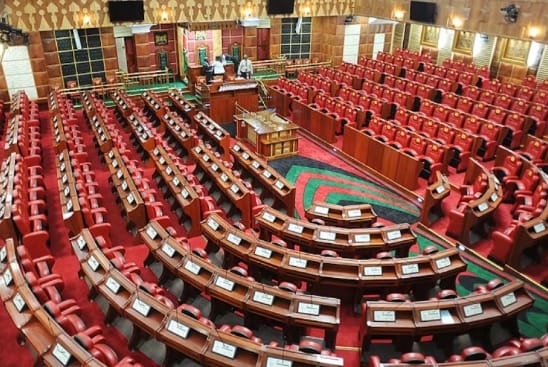
Inside Parliament’s Shadow Economy: How Alleged Bribery Shapes Kenya’s Politic
For years, Kenyans have raised questions about the integrity of their leaders, but recent revelations have once again cast the spotlight on Parliament as the epicenter of alleged corruption, bribery, and political manipulation.
Parliament is often hailed as the guardian of democracy, but behind its walls, whispers of “cash-for-votes” deals and leniency-for-hire schemes paint a picture of an institution that can be swayed by money as much as by public interest.
A Market of Influence
President William Ruto recently lifted the lid on what he termed the “soko huru” (free market) scheme in the Senate. According to the President, powerful individuals summoned before committees are not necessarily grilled based on merit, but on how deep their pockets run. Payments, he claimed, are made to ensure “friendly” questioning or to water down investigative reports before they reach the floor of the House.
“For example, the latest soko huru in the Senate… Where does somebody find Ksh.150 million? That is money that belongs to the county,” Ruto remarked during a Kenya Kwanza parliamentary meeting in Karen.
The comments triggered uproar among Senators, with many demanding that the President table evidence. Still, the allegations highlight long-running suspicions about how parliamentary oversight has been weaponized for personal enrichment.
Votes for Sale
The issue is not limited to committee hearings. In 2024, as the nation convulsed in protests against the controversial Finance Bill, Juja MP George Koimburi claimed colleagues had been bribed with up to Ksh.2 million each to pass the legislation. His allegation came at a time when public trust in lawmakers was already at its lowest, after demonstrators stormed Parliament in anger over the Bill.
National Assembly Speaker Moses Wetang’ula later directed Koimburi to explain his claims formally, but the accusations remain etched in the public mind, deepening doubts about the integrity of key votes in the House.
Political Battles, Big Money
Even high-stakes power struggles have not been spared from bribery claims. During last year’s political fallout involving former Deputy President Rigathi Gachagua, reports emerged that MPs and Senators were bribed to support his ouster.
Gachagua himself alleged that clandestine meetings in Nyahururu and Kitisuru, some hosted by a Cabinet Secretary, were used as platforms to distribute cash in exchange for votes. Senators were later accused of pocketing up to Ksh.10 million each to seal his fate a claim denied by several members, though rarely with convincing detail.
The Bigger Picture
Kenya’s political landscape has long been scarred by corruption. Every administration enters power promising to slay the graft dragon, only for allegations of bribery and shady dealings to re-emerge stronger than before. With 349 lawmakers 290 directly elected, 47 women representatives, 12 nominated, and the Speaker Parliament holds immense influence. But when accusations of corruption dominate, the body risks losing not just its credibility, but also its very mandate as the custodian of democracy.
As the Ruto administration doubles down on its anti-graft rhetoric, the question many Kenyans are asking is: can Parliament truly clean itself up, or has bribery become the unofficial currency of politics?
Ends///…